Smarter Mobile Systems with GPS & Precision Navigation
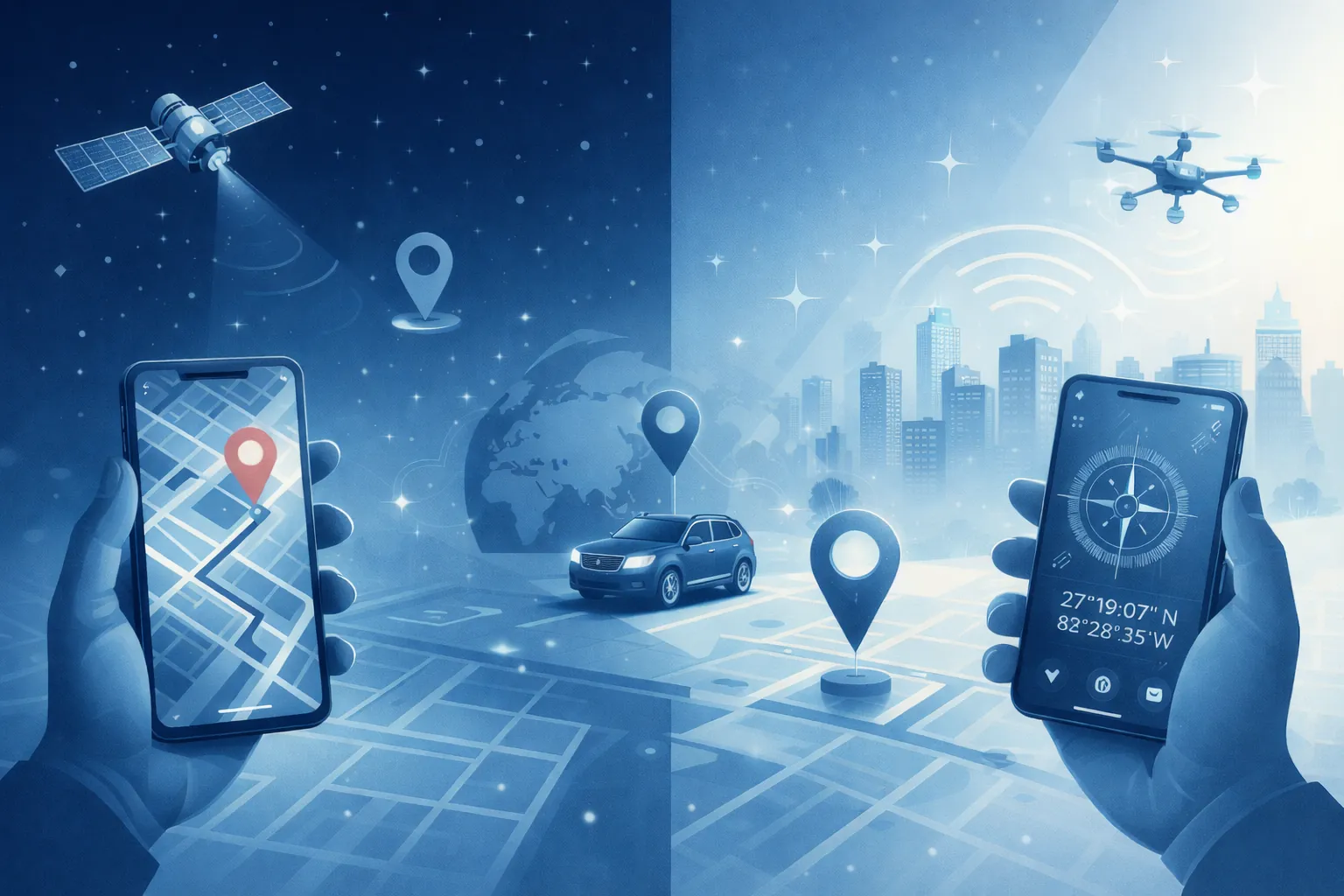
Modern mobile apps don't have to wait for users to tap buttons, scan codes, or manually enter data. With GPS, sensor fusion, and precise positioning, apps can become context-aware systems that act automatically — often outperforming traditional "offline" or non-location-aware systems in speed, accuracy, and user experience.
Let's break down why precision location is such a game-changer and how to design systems around it.
Core Architecture of a Precision Location System
A robust system usually has 4 layers:
1️⃣ Device Layer (Phone)
- Location services
- Motion detection
- Geofence monitoring
- Background processing
2️⃣ Context Engine (App Logic)
Interprets signals:
- "User entered zone A"
- "User is stationary for 5 min"
- "User moving > 50 km/h"
- "User is indoors near beacon X"
3️⃣ Cloud Intelligence
- Stores historical movement patterns
- Applies rules / ML
- Validates anomalies
4️⃣ Action Layer
Triggers:
- Access permissions
- Notifications
- Device control (IoT)
- Logging / automation
Powerful Use Cases
🚗 Smart Access & Mobility
- Automatic vehicle unlocking when user approaches
- Parking sessions auto-start/stop
- Toll or entry validation without scanning
🏢 Property / Building Systems
- Doors unlock only when user is physically present
- Guest access expires automatically after leaving area
- HVAC adjusts when occupants approach
🧑💼 Workforce & Operations
- Attendance without check-in buttons
- Field worker validation at job site
- Fraud-resistant presence verification
🛍 Retail & Experience
- Personalized offers based on store section
- Queue detection via dwell time
- Staff allocation based on crowd heatmaps
Internet + Location = Intelligence
Offline systems are blind to:
- Historical patterns
- Shared system state
- Cross-user validation
Cloud-connected location systems can:
- Detect impossible travel (fraud)
- Learn routines (predictive triggers)
- Coordinate multiple users/devices
- Adapt rules dynamically
It's the difference between a calculator and a navigation system.
Privacy & Trust (Critical)
A superior system must be:
- 🔒 Transparent
- 🔒 Permission-based
- 🔒 Minimal data collection
- 🔒 On-device filtering where possible
Best practice:
- Store zones, not raw paths
- Use anonymized identifiers
- Explain why location is needed in plain language
A precise system that users don't trust will fail.
Related Articles

The Future of AI in Enterprise Software Development
Explore how artificial intelligence is reshaping the way businesses build and deploy software solutions.
Building Secure Applications: 2025 Best Practices
Essential security measures every development team should implement in their software projects.